Thursday, September 23, 2010

anime

Today I bought Volume 2 of Fullmetal Alchemist: Brotherhood. Apparently, of the three Best Buys in my area, only one sells enough anime to stock the show in Blu Ray.  That's kind of sad, but one store is better than none.

When I got home, I looked up the show's episode count, and did some quick math. At the rate that Funimation is going right now, they can release all of Brotherhood in exactly five volumes.  At 44 bucks each on Blu Ray, that's.... ouch.  That's a lot.

I've been going back and forth on whether I should keep buying the show on BD.  To be honest, it isn't so much the price that gets me.  13 episodes for that much dough is still cheaper than anime in the days of singles releases.  I guess what bothers me is that so far, the show hasn't proven that it's worth watching in Hi Def.  The fight scenes look gorgeous, but like with so many anime these days, there have been episodes where hardly anyone moves, and so the BD quality feels like a waste.  Meanwhile there were a few stories in volume 1 which felt slow and unnecessary, despite the fact that the first fourteen episodes are already a compression of events in the original series. I know it gets better over time, but Fullmetal is one of the only surefire money makers right now, and I figured they'd be more willing to pull out the stops.  I want to make this a "one episode per week" show, but that only seems to work with 13 episode series, where every single one has to count.

IE 9

I tried the IE 9 beta out last night.  I had trouble thinking of a way to describe it, so I will go with my original, awkward summary - it feels like Microsoft is approaching their consumer oriented web browser the same way they treat their professional products.

See, if you're just a normal computer user, MS doesn't really have to try and sell you on its wares.  Chances are you're going to upgrade your computer right around the time that a new version of Windows comes out, in which case they've already got you.  Businesses, on the other hand, are trickier.  They're going to spend a hell of a lot more, and as a result, they're going to be much more hesitant to update their software on a regular basis.  It is up to Microsoft to find ways to get them to do so anyway.  They have a few methods, one of which is to make a product work on multiple OS's, but work best on only one.  If you want all the new features (and chances are, at least one of them won't be useless), you either pony up, or take what you can get.  Sooner or later, your OS of choice won't be supported at all, in which case you will have to move on whether you like it or not.  Another classic tactic is to lay a ton of sheen and polish on the surface of a program, but leave the inner workings and menus exactly the same, leading to an aesthetic nightmare and, in some cases, a program that spends too much time with useless, sellable features that it fails to work on the issues which really need addressing.

These tactics pretty much sum up what MS has done with IE9. Take a look:

-  It is tightly integrated into Windows 7, with all sorts of features which I haven't yet seen
-  It will run on Vista, but without all the same features
-  It won't run at all on XP
- The interface is brand new, minimal, and integrated into the look and feel of Aero.  Meanwhile, the Internet Options menu is exactly the same as it has been since IE4 or so.  Not only does it look old, but it makes you wonder - if IE keeps supporting all these new features on the web, then why are we still configuring a web browser the same way we did in the days of dial up?

MS is using IE to give users the double deuce.  It is telling WinXP users that if they're pretty much screwed at this point, while Vista users are going to have to pay for spending money on the company's mistake. 

Thank goodness for options.

Tuesday, July 06, 2010

Kindle reminds me of Kindling

Android phones finally have a version of Amazon's Kindle app.  I have been waiting for this for a long time now, though sadly if I hadn't unintentionally found it in the Marketplace last week, I probably still wouldn't know about it. 

Now that it's out, the question is whether it is any good, and even still, if it is worth a download.  The whole ebook thing never really excited me at first, mostly because they were always discussed in the context of expenseive e-readers, a device which I still consider to be unecessary. I know this comes from the guy who has spent the same amount of money on portable gaming consoles, but at least those are meant to run sophistacted pieces of software.  Spending hundreds on a large reading device whose sole selling point is a special screen meant to emulate the look of paper is not, in my mind, quite the same.  This was especially true to me after having finally seen a Kindle in the wild, and finding that magic "e ink" technology didn't look all that different than a regular old screen.

Of course, Amazon is smart enough to know that the real money comes not in selling their e-reader, but in getting people to buy their digital books.  Which is why they have made a free Kindle app for as many devices as they can.  In this context, ebooks start to become a lot more appealing. I still love the feel of a real book, and I enjoy the act of going to the library, but library selections can vary wildly based on your location, and time constraints keep me from doing so as frequently as I would like.  At the very least, a Kindle app could serve as a reader program for the hundreds of free classics available online.

This is exactly what I set out to do, and this weekend, I gave the Android version of Kindle a spin.  While it certainly isn't' the first reader program on the OS, and also not the first I have tried, I find it so far to be the best.  The main screen is pleasant, and makes it easy to find your books (it updates itself whenever it is started, so you don't have to manually refresh).  Reading the books themselves is also made intuitive.  You tap the sides of the screen in order to change pages (which I suppose is true for all of the different versions of the App), and the responsiveness is perfect.   You can also change the size of the text, which I find to have a powerful psychological component.  One one hand, I like to zoom it out a bit, so the little cell phone screen contains about as much text as a real paperback.  On the other, the default size breaks each page into bite sized chunks that are easy to stay focused on.  There's also a silly feature which Amazon has branded as Whispersync - whenever you finish reading, the app uploads your place in the book, so that your spot is synced up on all Kindle fueled devices you own.  While I'm glad to know I could switch between my phone and my PC, I don't see myself doing it.

And now for the most important question - is it actually easy to read on a phone screen, or any screen for that matter?  Lots of people believe that this isn't the case, and I agree that I struggle to read any good piece of fiction on an LCD monitor (which is why I stopped bothering to use that site that emails you a book chapter every morning).  However, cell phones these days have very excellent screens, and so the e-pages jump out at you, and do a good enough job at imitating a page.  Furthermore, while phone  screens aren't large, they tend to be oriented like an actual book, rather than the mostly widescreen monitors we tend to use on our PCs. 

I don't see myself buying tons of ebooks, but so far, I'm glad to have the option. 

Sunday, June 27, 2010

Comic Timing

I feel like I need to use this blog more for venting.  It would probably do me a lot of good.  After all, no one's really reading this, right?  (hi Joe!)  And even so, there are plenty of people with actual fame and notoriety that get away with writing any old crap by claiming "it's just a blog post!"  Might as well get away with what I can.

I just wrote a review for the DS game Flower, Sun and Rain for videolamer. It is half critique, half rambling against the entertainment industries of the U.S. and Japan, but I don't think it ended up crossing the line.  I have a habit of railing against the games industry when I should be writing about a single game, but FSR is a game by Suda51 and his studio Grasshopper Manufacture.  These guys are notorious for making games with deeper commentaries on both game design and society, who have a habit of making these points in games which are themselves faulty in design. 

It's the kind of conundrum that I feel like I see all the time these days; something comes out that is either bad, or just partially bad, and someone comes along to tell me that this badness is, in fact, intentional.  This leads me to stand there and wonder whether they're being sincere, insecure, or so condition to embrace the modern perception of irony that their response is simply rote.  With FSR, I came to the conclusion that there's an honest game somewhere inside, but I know that somewhere, someone is out there who would violently disagree.  This doesn't bother me, but as one who strives for honest critiques, it makes me wonder if I'm giving Suda's games the same kind of pass that I yell at others for giving the things that I hate.

In case you're wondering, this all stems from the fact that I was this close to devoting a paragraph of the review in order to make fun of the band Muse.  Luckily I punched out at the last minute and avoided this mistake.  I'm trying to review a video game.  I'm lucky to have anyone reading it in the first place.  The last thing I need to do is drive them away by trying to impose my flippant observations on popular music onto them.  It would be even worse to do so by pretending to make a clever comparison to the game.  There are already too many games writers who make their body of work more about them than the games they cover; the last thing I want to do is make that situation worse.

So instead, I'll take that reference and write about it here. Muse kind of pisses me off.  In my mind, they are the kind of band that is trying to get away with pulling off a variety of ideas that, in the year 2010, musicians should have a pretty fair grasp of how to pull off (and in some cases, the ideas are simply stupid, and they should know better than to use them).  Yet they go ahead with it anyway, and their fans make plenty sure to give it all a pass.  They're a fine example of why I struggle to get into a lot of modern bands, indie or otherwise; I can never tell who the fuck is being sincere, and who is simply lost and confused. 

A good example of my frustrations can be found in "Uprising", the opening song of their latest album, "The Resistance".  The song has this funky, fairly cheesy disco beat, with lyrics that tell everyone to rise up and fight against evil governments and corporate overlords.  The overall tone and lyrical content makes me almost - almost - think that it is a satire on inexperienced, overly delusional people who rail against The Man without truly grasping what The Man is, or how best to stop Him.  Yet the Internet has bred a generation of kids who easily eat this shit up, and the theme of the song is also in the name of the entire album.  So the fans can tell me that it's meant as a joke - you can tell me anything on the Internet, if you really want - but I don't have to believe it.  The fact that the band has been featured on the soundtracks of the Twilight films, which only know how to take themselves seriously, makes it apparent that at least someone in charge of marketing has deemed Muse as needing the serious angle.  That's not really damming proof, but it's a bit more concrete than the words of anonymous fans.

But still, even if we were to buy the notion that Muse is cracking a joke, one more question remains; is it a good one?  I don't think so.  This gets back to another point I made in the FSR review - these days, an entertainer (or their fans) can simply state their intentions, and everyone behaves as if they succeeded in their goals just because they tried.  There's still a matter of quality of execution, and in this regard, the Muse song fails.  For comparison, look at most Dead Kennedys songs.  You can tell that DK isn't interested in killing the poor, and you know that they aren't cops looking to abuse their power.  Their lyrics discuss these topics because they're attempting to lash out at certain aspects of society, and this is made crystal clear by both the tone of the music and the vocal delivery.  With Muse, I can't immediately tell what side they're trying to push, and if you think about it, the side the fans want you to believe - that this mega popular band, signed to a major label, is mocking the idea of resistance - is actually a more scary alternative than if they were dead serious in their overblown, out of touch protest.  In either situation, good taste loses.

To go back to a previous statement, this shit frustrates me because there is no sincerity in it.  There's none in the music, or the fan's reaction to it.  A band like Muse exists solely to address the interests that gullible kids have been told to enjoy.  I guess the only difference between them and pasts bands of this ilk is that arrested development has caused an army of twenty somethings to eat this up at an age when they should probably know better.  But this can be a big problem, since these twenty somethings are so afraid to grow up, or even take a stand for what they think, that they muddy the waters of discussion by sewing doubt in the minds of  anyone who dares think that the stuff they started getting into in college may not be timeless.

Muse Nation, take it from an ELO fan: like symphonic pop, symphonic rock isn't awesome by default.  If you're not using the string section to enhance and improve the rock sound, then kindly get it out of the song.  Don't fuck things up because you feel the need to insert some false sense of classiness into your favorite genre, and are too lazy to explore actual classical music. 

Thursday, May 27, 2010

Review - A Hard Day's Night

Album: A Hard Day's Night
Release Date: July 10th, 1964


 A Hard Day’s Night was momentous for several reasons.  It was the first Beatles album without any cover songs, as well as the only one written entirely by Lennon and McCartney.  It also served as the soundtrack for the band’s first feature film.  That’s quite a lot of firsts for just their third album, and it becomes even more interesting when you figure out the proper historical context.  A Hard Day’s Night, both the record and film, is said to represent the state of the band at the height of Beatlemania.  This assertion is so strong that I believed it to be true before I ever read anyone who outright stated it.  It became one of those givens of music culture.

The trouble is that the collective consciousness tends to ignore dates.  I always thought that Beatlemania was the result of years of success, but A Hard Day’s Night was released a little over a year after Please Please Me.  Beatlemania actually happened fast and early. What we don’t often hear is that pop music in the 60’s was not too different than it is today.  It was based entirely on trends, with no act having a shelf life of much longer than a year, at least as performing musicians.  After that, they might find opportunities in TV or film.  The industry was generating personalities, and was perhaps more blatant about it than it is today.  As the Pitchfork retrospective explains, the album’s response to this cynical outlook is it’s greatest achievement.  The Beatles knew that they didn’t have to bow out gracefully if they could prove that they were still relevant.  So they showed that they could write their material all on their own, and they made said material push boundaries that no one expected pop songs to try and bother with. 

So far I’ve admittedly only recycle other, better observations on this record.  Now for my own opinion on its quality.  It’s one thing to say that the band tried to push the pop envelope, but did they actually succeed? And can a modern listener without much musical knowledge tell the difference?  I think so, but it isn’t always easy.  Some of the songs here still have that sock hop sound, with cutesy lyrics and harmonies, but legendary tracks like “A Hard Day’s Night” and “Can’t Buy Me Love” certainly feel more mature and exciting.  The content is not about awkward teenagers, but perhaps somewhat older lovers, dealing with love and life and money and jobs.  They may not sound edgy by modern standards, but they make it clear that the band was now about touch as much as it was look.  Tracks like “If I Fell” and “And I Love Her” are slower and more mellow sounding.  A Hard Day’s Night deals with all the same themes, but childish pining and fictional pain are replaced with something that sounds more like real love and loss.  Compared to past works, there is definitely an evolution in sound and content, and if you  still believe it sounds straightforward, you’re right.  It’s just that the reasons for this are that The Beatles helped establish several decades worth of pop canon, starting somewhere around here.

Overall, I find A Hard Day’s Night to be something I have to listen to from start to finish.  There are no tracks that I cherry pick, nor are there real stinkers.  It is a thoroughly enjoyable event, from start to finish, and I tend to only bring it out every so often, so as not to burn out on it.  Perhaps my favorite thing about the album is how it reminds me that pop music doesn’t have to be disposable; it is simply often made that way by design.  When someone insults The Beatles for being a “pop band”, they’re gonna have to try harder.   

Tuesday, May 25, 2010

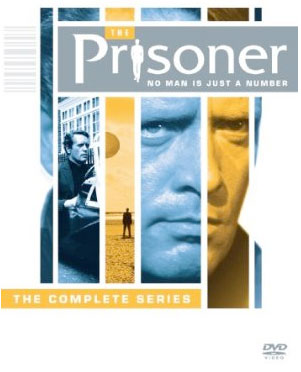
The Prisoner - Recap

So I never finished my Prisoner recaps. Sorry for that. At the very least, the last few episodes are wild and speculative enough that any interpretation I might won't add up to much. There are certain scenes and questions which cannot be answered, and they don't need to be either. Still, this post might have some analysis.

I do want to talk a bit more on my final thoughts on the show. It's been months since I finished the final episode, but I just rewatched a few with audio commentary on, and they provided some insight and observations which have helped improve my interest and appreciation of the show.

There are a lot of reasons to admire The Prisoner, and what I've really come to see is just how lucky we are to have something like it. It was different than most shows of its era, and difficult to write, film, and produce. The fact that it came out at all, let alone managed to be so good, is incredible.
Another point of merit is that the show's subject matter is easy to fuck up. Everyone loves referencing 1984 and Brave New World, and calling things they don't like "Orwellian", but it is easy to miss an important point of these classic books. Orwell and Huxley were against the terrible dystopias they created, but they also emphasized just how powerful they are. Neither novel's protagonist succeeds in the end, and in the case of Brave New World, the only person who really fights against society is someone from outside of it. I find that people seem to cling to stories like The Matrix, in which the heroes are pure and virtuous, being fully disconnected from the societal machine, and having little to no care for the poor "sheep" (or if concern does exist, it is so half assed as to be irrelevant). They like to believe that if they were in the story, they too would be free and enlightened. This, of course, is entirely bullshit. Orwell and Huxley knew that we're all part of society to some extent, and once you're a part of it, it is extremely difficult to break away. The answer, then, may not be to escape and destroy, but to prevent these nightmare scenarios from ever occurring. Most of the supposed "free thinkers" I am referring to are more like the Huxley's character Bernard. He has the ideas, and he thinks highly of himself for this, but he doesn't have the guts to act upon them. In the end, he's a flake who crumbles due to fear and jealousy.

The Prisoner, on the other hand, very much gets the point. For most of the show, we see Number Six find new and more clever ways to try and escape, and every one of them fails. He finally understands that the people behind The Village have influence far beyond it. There is no getting out; instead, all he can do is pretend to play along, while trying to fuck with them in any way he can. In the end, he wins the battle of the minds, but by the end of the final episode, it isn't clear that his efforts have done anything. The Village is destroyed, but there's no definitive proof that Six has escaped his captors for good. The cycle will continue, and escape is likely impossible.

I also found that, despite what you might expect, The Prisoner is friendly to the plight of its victims. Number Six is the most individual of anyone in The Village, and his plight is very much his own, but he isn't the only person who tries to escape or fight back. He often tries to enlist the aid of others who have seen through the lies (none of whom last very long), and those that have bought in to the system are not looked at as sheep ripe for collateral damage, but as people whom are worth saving. He has contempt for those that work towards keeping the prisoners at bay, but both he and the viewer can tell that the people are being trapped by very powerful mechanisms which a single person can't hope to break. In the end, Number Six very much wants to escape The Village, but he also wants to put a stop to it. This level of concern is rare, but it is important in that it shows that while The Village is the result of man's evils, it's success is caused by failings weaknesses of man which cannot simply be prevented.

This brings up an apparent contradiction - in the end, a single man does manage to defeat the system, at least temporarily. The key here is to understand that Number Six is more of an allegory for the human spirit, the fight for freedom, than he is a person that we can hope to perfectly emulate. Indeed, the only reason he succeeds at all is because he is able to learn from the failures of those who acted before him, and because The Village considers him so important that his rebellion is met with only mild punishment. Six is treated specially compared to everyone else, and this isn't because he is some special person. Rather, he is treated as such because he represents an ideal, one that is so powerful that they do not wish for it to spread. In most fiction of this nature, the viewer is tempted to see themselves in the hero, to believe that they too are special compared to the rest of humanity. That isn't the point of The Prisoner; we will never have the constitution or the lucky breaks that Number Six is gifted with. Yet he is someone we should all aspire to be like, because if enough people stand up and fight back, then we can cover our individual weaknesses and work together as a cohesive whole. I believe this interpretation works well with the ending, which shows that, alone, the ideal as man is only able to inflict temporary damage to the system. The only way to truly break it is for people to come together. This sense of inclusion is what makes The Prisoner so powerful and unique. It doesn't tell us to save ourselves and abandon the world, and it doesn't want us to hide behind a mask (which is why I still loathe the popularity of the V for Vendetta film adaptation). We must stand up and make our faces known, but we must do it together if we want to succeed.

A lot of people hated the ending to The Prisoner. Everybody wanted a proper reveal. Who is Number One? What does he want? How is he stopped? These are the questions viewers wanted answered, and McGoohan rejected them all because they were never the point. He wanted it to be an allegory on society, while everyone else wanted a traditional "good versus evil" yarn. If the show was leading up to a proper ending, with escape and victory, it probably would have built up to such an event, with clues and reveals being sprinkled into each episode. As it is, the show has little to no continuity between episodes, and no one can agree on an official ordering. It makes sense that viewers of the time were upset, but in the modern era we should know better. The Prisoner echoes many moderns shows like Lost and Battlestar Galactica, which fail to create a satisfying ending and often fall back to the "story as metaphor" explanation. The difference is that these shows spent several seasons previous behaving as if there is strong continuity and development within the plot, and that a resolution is forthcoming. The Prisoner was victim of audience expectations, but modern shows are victims of trying (and failing) to address those expectations. In my mind, they deserve far less sympathy. McGoohan had something he wanted to say. The writers on Lost simply fucked up.

And so it pains me to see that in the decades since, the TV critics who are supposedly concerned with the quality of modern programming continue to regard The Prisoner as a wacky footnote in the history of the medium. The truth is that it's themes, its tone, and its delivery are all far more powerful, interesting, and viewer friendly than most of today's failed serials. We compare it to so many other works as if they had anything in common, yet if we spent more time looking at what this show was trying to achieve, we'd see just how much different it really was. If we truly learned the right lessons from it, and improved upon its ideals, then I'm sure that TV storytelling would be worlds better than it is now. Like it's main character, the show was merely a dent in an ever moving machine.

Thursday, May 13, 2010

The Hold Steady

The Hold Steady are one of the great polarizers in modern music. Rather than trying their hand at some postmodern experimentation, they play straight up classic rock, inspired heavily by the sounds and lyrics of Bruce Springsteen and the E Street Band. It's a familiar, fun sound that has given them the infamous title of being the greatest bar band around, something to play while the drinks are flowing among friends. Naturally, such a sound is considered unworthy of any deep examination or critical acclaim. As the albums kept coming, and the band continued to play songs about teenagers in peril, music fans began to stop fighting over the band, and simply stepped onto one side of the line, knowing that this schtick was the only sound they knew how to make.

Being a fan of both classic rock and sincere music, I find myself being pro Hold Steady. They may not shake my musical world, but I find them to be a necessary comfort food in an age where modern music doesn't know what the hell it wants to be. Furthermore, the band is a fine example of how age of a song or act can affect our view of it. No one faults an old and rich Bruce for singing about hardships and youthful mistakes, so it seems silly to make this claim against The Hold Steady.

Be that as it may, there can be striking levels in quality in even such a straightforward theme. my first Hold Steady album, Boys and Girls in America, had a sound that was far more fun than sober. It was as if the band was saying "take a look at our youth today. Aren't they so crazy??!?", at the same time that you could envision the keyboardist slamming back a brew between furious solos. This is probably why Pitchfork media gave it such a favorable review - the hippest and coolest of the music indsutry seem to latch on to bands where you aren't quite whether they're looking at you with stern seriousness or a wink and a nod.

Meanwhile, time has gone on since "Boys and Girls", and while the band is still covering the same topics, their approach has definitely changed (I won't say evolved, exactly). Critics have described this as The Hold Steady sliding into a position as elder statesmen of modern rock, looking back at the trials and tribulations of youth while no longer being apart of it. At first, I thought this was a bizzare statement to make. The band's first major release was only back in 2004, meaning that singer Craig Finn has been in his thirties the entire time. In music years, it seems like he should have been an elder statesman all along. But we live in an age where everyone is growing up slower, and you can bet your ass that a 32 year old can still be found partying hard, or at most, is starting to grow out of that phase. Now that Finn is closer to 40, play time is definitely over. The fact that we didn't see The Hold Steady grow out of their twenties doesn't negate the fact that people of any age can change a lot in the span of six years. They may not have followed the traditional rock band narrative, but how much does that really mean? In any case, regardless of what labels the band has been stamped with, the songs themselves are all you need to see that they really have done some growing up (more on that in a future review).

In any case, this transformation of sorts has led to the usual results. Their last two records have met with increasingly lower grades from the hipster critics, all the while gaining more praise from mainstream outlets such as Rolling Stone. This is due to the fact that, depending on where your music tastes lie, the concept of "growing up" means either giving in to wild experimentation, or settling down. Personally, my own tastes are far too unpredictable for me to agree with either approach wholeheartedly, so I tend to judge each band's progress on a case by case basis. In regards to The Hold Steady, their newest album is out, and I think I'm ready to hold court.