In general, the comments section of any article on the Internet is usually worthless and terrible. No amount of useful information an outweigh the feelings of despair and sadness about the future of the human race that come from the rest of the users. Yet no matter how many times you hear someone say "if you don't like them, stop reading", the mere existence of these worthless comments can be enough of a temptation to comb through them. Thankfully, there's an easy fix - plugins like Noscript for Firefox usually prevent most comment threads from displaying, and I find that I usually won't go looking for one if I don't see it.
"Usually" being the keyword. Every so often I decide to live dangerously, and open the comment section of an unfamiliar website. The results are never pretty, but I can't remember the last time I witnessed levels of stupidity on par with what I found on display at mobile phone/Android enthusiast sites. I've been checking them out ever since getting the new phone, in hopes of learning more about the smartphone market and Android in particular. This is something I can do without ever touching a comment thread, but the flaky release schedule of Android v2.1 for the Droid caused me to wander into the belly the of the beast.
As my coworker (and months long Droid owner) explained to me, 2.1 has been promised to release on the phone since sometime in January, and both Verizon and Motorola have not always been crystal clear as to why it was constantly delayed. This, in theory, is where a comment thread should be useful - users can share rumors or information that they have, speculation can run wild without overrunning editorial. Since I missed out on most of the update drama, I figured the comments would be a good place to get up to speed on information that is too old to cover in the news, but important enough for users to care about. Too bad the 'net never works like it does "in theory".
The most recent information about the update has been a statement that "we'll get it out by end of March", and sure enough, the update really did kick off yesterday. By this morning, zip files containing the update were all over the web, useable by anyone who wished to a do a manual installation. On a whole, not only was Motorola's statement (finally) accurate, but all it took was a good night's rest for the update to show up. There shouldn't any reason for drama, right?
Wrong. For one, these phone enthusiasts abused capital letters, exclamation points, and grammatical errors in ways that I thought had gone extinct in back in 1998. People were calling it an April Fool's joke, despite the fact that the news lined up with what we were told and it still March. There were people flipping out at the fact that no one had uploaded an update.zip file before midnight, meaning there were people who were losing precious sleep over this fiasco.
And of course, now that Droid owners all over the 'net have manually updated their phones, Twitter is awash with the sound of "meh", as the same people who frothed at the mouth over 2.1 find that it isn't that big of a fucking deal.
I guess the biggest question of all is this - I've seen things like this happen throughout the years. Why do I still let it surprise me?
In any case, it's a cute little update. The news and weather application is handy and convenient, though I'll probably keep the Weather Channel program as well, since it has a much more detailed forecast for the rest of the week. I like the new photo gallery program, since it kind of works like the one on a Playstation 3. I tried the pinch to zoom on the browser, and it's cute, but I don't know how to use it very well, so it doesn't seem any better than the standard zoom tool. The only other "wow factor" feature are the live wallpapers, which are pretty much like the ones in Windows Vista - you'll show them off to a friend, and then switch to something that takes up less system resources. Actually, I lie - the Polar Clock live 'paper might be permanent for me, since it makes the phone look like something out of Wipeout or Ghost in the Shell.
From what I can tell, this update did not up the number of home screens from 3 to 5, though hell if I would ever need that many. I guess 2.1 does a fine job explaining why people got so worked up, only to immediately burn out. Gadget enthusiasts only care about having something that is new and cutting edge. They like seeing numbers go up. Once they actually have to use their device in a productive way, they realize that they already have everything they need. I guess it's their form of entertainment, though damn if it doesn't clog up fine websites and forums.
PS - I keep hearing from folks that April Fools is starting to become a weeklong barrage of pranks, rather than one day of good fun. Thanks trolls, you ruined something else.
Wednesday, March 31, 2010
Tuesday, March 30, 2010
24 has been Canceled
Yeah, I guess 24 may have been canceled in the middle of it's eighth season. Can't say I'm sad to see it go. While I do get a kick at the fact that it outlasted Heroes (I got so much shit when both shows competed in the same timeslot), 24 should have gone the way of the dodo a few seasons ago.
I was talking to my brother about this a few weeks ago, and interestingly enough, an article from Time Magazine had about the same explanation as I did about where it went wrong. In the start of season 6, Jack kills his friend and comrade Curtis without blinking, all because the writers decided to give him a previously nonexistent vendetta at the last minute. Moments later, a nuclear bomb goes off in Los Angeles. Jack is on the ground, shocked by the combination of both events, vomiting on the grass. I wasn't sure about it then, but the show was over for me at that point. That was when my subconscious realized that the writers had ran out of ideas. 24 was never afraid to kill off anyone and everyone on the cast if it helped advance or improve the plot, but Curtis' death was neither moving or surprising. It just felt unnecessary. More importantly, this was the first time the show had a nuke had gone off without a hitch, yet a few episodes later no one seems to care. I have vague memories of a scene in which a badguy of sorts is arguing with his wife while driving, providing what was supposed to be comedic relief. But I don't imagine anyone driving, or chit chatting on a cell phone, or walking on the sidewalk after a nuke goes off. One of the most powerful plot devices that 24 - or any show for that matter - has ever tried to rely on was turned into an afterthought. How could we have any trust in the writers from that point on?
Sure enough, there wasn't any reason to after that. Jack's family is revealed to have been involved in Secret Villain Plotting, but the conflict is introduced and resolved with such little fanfare or scope. It should have dovetailed wonderfully with the end of Season 5, but it was made into another afterthought. With Season 7 we got a new setting and a largely new cast, and once again characters are knocked off with abandon, and a yet another secret society is introduced. Fast forward to Season 8, which I haven't watched more than an episode of. I asked my family whether those Big Bads from Season 7 were still kicking around, and at the time, they said 'no'. In other words, 24 keeps dabbling with continuity, only to follow up with seemingly standalone seasons. It's sloppy, teasing, and hard to give a damn about.
Let's face it folks - 24 has never been the height of TV entertainment. But it always manage to squeeze out more action scenes than I ever expected to see on Primetime, and the concept was intriguing enough to generate basic suspense. Nowadays, not only is the concept worn out, but there's no point in trying to guess what will happen next, not when the answer is forgotten within the span of two episodes.
Damn shame. Time to find something else to watch weekly.
I was talking to my brother about this a few weeks ago, and interestingly enough, an article from Time Magazine had about the same explanation as I did about where it went wrong. In the start of season 6, Jack kills his friend and comrade Curtis without blinking, all because the writers decided to give him a previously nonexistent vendetta at the last minute. Moments later, a nuclear bomb goes off in Los Angeles. Jack is on the ground, shocked by the combination of both events, vomiting on the grass. I wasn't sure about it then, but the show was over for me at that point. That was when my subconscious realized that the writers had ran out of ideas. 24 was never afraid to kill off anyone and everyone on the cast if it helped advance or improve the plot, but Curtis' death was neither moving or surprising. It just felt unnecessary. More importantly, this was the first time the show had a nuke had gone off without a hitch, yet a few episodes later no one seems to care. I have vague memories of a scene in which a badguy of sorts is arguing with his wife while driving, providing what was supposed to be comedic relief. But I don't imagine anyone driving, or chit chatting on a cell phone, or walking on the sidewalk after a nuke goes off. One of the most powerful plot devices that 24 - or any show for that matter - has ever tried to rely on was turned into an afterthought. How could we have any trust in the writers from that point on?
Sure enough, there wasn't any reason to after that. Jack's family is revealed to have been involved in Secret Villain Plotting, but the conflict is introduced and resolved with such little fanfare or scope. It should have dovetailed wonderfully with the end of Season 5, but it was made into another afterthought. With Season 7 we got a new setting and a largely new cast, and once again characters are knocked off with abandon, and a yet another secret society is introduced. Fast forward to Season 8, which I haven't watched more than an episode of. I asked my family whether those Big Bads from Season 7 were still kicking around, and at the time, they said 'no'. In other words, 24 keeps dabbling with continuity, only to follow up with seemingly standalone seasons. It's sloppy, teasing, and hard to give a damn about.
Let's face it folks - 24 has never been the height of TV entertainment. But it always manage to squeeze out more action scenes than I ever expected to see on Primetime, and the concept was intriguing enough to generate basic suspense. Nowadays, not only is the concept worn out, but there's no point in trying to guess what will happen next, not when the answer is forgotten within the span of two episodes.
Damn shame. Time to find something else to watch weekly.
Wednesday, March 24, 2010
Blockbuster
My local Blockbuster is closing down. I found out last week when I walked down to rent a game, only to encounter massive closing signs on the windows, and price tags on everything. I picked up a couple cheap games instead (making it almost six months since I've bought a $60 game).
I never used Blockbuster until I lived in Maryland. Where I grew up in Pennsylvania, they simply didn't exist. Meanwhile, once I moved to Baltimore they became my only choice. Yet I never went to them with any great frequency, despite it being a mere ten minute walk to the store. I can think of a couple of reasons why.
Netflix - this is the reason every else gives, though it isn't the same for me. I don't subscribe to Netflix myself, but my roomate does, giving me access to their streaming service on the Xbox 360. The amount of movies they offer to stream is staggering, more than I could hope to get through. With that kind of selection, even a ten minute walk is too much.
The main point about Netflix, I think, isn't so much convenience as it is price. They helped make movies cheaper. A Netflix subscription lets you see quite a few movies by mail, and even more via streaming. There's no reason to even spend four bucks on a rental when double or triple that price can give you more films per month.
Gamefly - Calling Gamefly the "Netflix of games" is a bad analogy, since it's costlier, and the games mail out more slowly. Still, if you use Gamefly as a compliment to your gaming diet, it can change the way you play. You can buy the big, meaty games at full price, and rent out the quick and dirty action games you might otherwise have ignored. This system has allowed me to stay current with the industry in ways that would have been prohibitively expensive otherwise.
Gamefly also beats up Blockbuster on cost. $15 a month for a single game at a time will, at the bare minimum, even out to two games a month if you take your time. At one point this meant that they were not any cheaper than renting two games a month at Blockbuster, but that changed 'Buster raised their rental prices to close to nine bucks. They went from being competitive to a non option. The only alternative was Blockbuster's deal in which you could save by renting two games at once, but that puts a severe time crunch on you that simply isn't necessary.
Flaky policies/pricing - the "no late fees" policy was probably terrible for business, but great for me. It gave me a whole extra week with my games, which was often necessary. But they quietly removed this policy, such that games were back to having a strict 5 day rental period. I suffered some fees by not knowing this, and after that happened I pretty much stopped going to them (even with Gamefly, sometimes I wanted something right away). If it was made a bit clearer to me, I would have accepted it a lot more.
I also discovered that the Blockbuster Rewards program was bullshit. It only really rewarded you if you rented a lot of new, expensive films. If you just got old, cheap rentals, or didn't rent quite enough games in a month, you'd get little in return. If they modified it so that every four or five games netted you a freebie, it would have been much nicer, but instead they reset your count at the start of every month. That just made it less of a reward system and more of a way to sucker you out of money. Which I guess was the point, but the potential was always there for something good.
They Didn't Really Compete - A year after I left Pennsylvania, a Hollywood Video opened up in town. In the one summer I was home from college, I found them invaluable. They always had a good stock, their game rentals were cheaper, and they frequently offered up free rentals on any product if you didn't come in for a few months. That got me back in the store in a hurry. The only phone calls I got from Blockbuster were when items were close to being due. They were far more concerned with you giving back their products than helping customers out. But I guess they can't be blamed for that, as my next point makes clear.
They had Nothing - For a brief period of time, I worked close to another Hollywood Video. The one time I rented from there, I was able to get Bioshock the day it was released. There were at least 4 or 5 other copies sitting there. Many people would say that this kind of fast service is what we should expect and demand, but I'm a patient guy. If you told me that a game would come in within the same work week that it hits shelves, I'd be a happy camper.
Which is why I was so often frustrated with Blockbuster - even a time frame of "within the week" was too quick for them. Sometimes you'd have to wait until the next week, and when you went down to grab the game you had your eye on, it wouldn't be there. They had one, maybe two copies, and both had been scooped up. You would come back a week later, and it was still gone. Two weeks later, and it was still missing. A month later, and you were shit out of luck. It was once explained to me that this was the result of the company's "gamer pass" plan, wherein you paid a Gamefly-esque monthly fee and could keep a game as long as you wanted. But when I tried to sign up for the service, the clerk told me that not only was it discontinued, but had been for quite some time. Yet the games were still being lost in the ether.
Here's my best analysis of what happened - when the Gamer Pass service wasn't keeping the games off the shelf, the No Late Fee Policy was. As I alluded to earlier, this system could be used to your advantage. You got an extra seven days after the due date to hang onto the item, after which they charged you full price and gave you ownership. So long as you returned it before the extra seven days was over, you just extended your rental time considerably.
But while this would keep the games out longer, it would still only be a matter of two weeks, not months. But the other, more devious side of the policy took care of that. No Late Fees was hardly no late fees, but I was amazed at how many times I saw another customer complaining at the fact that they had been charged thirty bucks for a dvd they hung on to. Blockbuster knew that those who didn't read the rules of the policy would just become lazier with returning items, in turn allowing the business to make more money. But this extra-lazy customer also kept the shelves barer for longer.
But the cherry on top was that these issues were only issues at all due to the low stock, at least for games. They will devote an entire wall to a single big film release, but games never got more than two copies. They just didn't give a shit, and it showed.
It didn't have to be this way - I know they haven't (didn't?) fare any better, but at least Hollywood Video used a simple, traditional approach. You rented stuff, and if you didn't return it, they would ream you. As long as enough people were responsible with their returns, a store could rent out an item enough times to recoup the costs. When it came to games, they offset the numerous copies that they would stock by selling them off once the game was no longer hot shit. Customers got cheap buys, and they cleared their shelves. This system wasn't better for business I suppose, but if Netflix wasn't around, it probably would have worked. And hey, at least you knew what you were getting into.
Blockbuster, on the other hand, had to play games. They had to constantly tweak their return policies and pricing, and showed little consistency in their stock. One month, the games were in one area, and another month saw them on the opposite end of the store. The Blu Rays would be in a tiny section, and some time later there are stacks of them in the week-rental area (with no clear indication that yes, these are cheaper than new rentals, but still more expensive than a dvd rental). My local store was emblematic of the company as a whole - always trying to make desperate and extreme adjustments in order to survive, which in the end only served to confuse and annoy us. People on the Internet make it sound like every consumer wants to be pampered, but we're not all that stupid. We know that we'll never get the best deal from everyone we do business with. All we really want is some consistency and a bit of respect. Whenever a company begins to act against it's customers, finding the best ways to screw them over, bad things tend to happen. People notice, and they don't always put up with it. Blockbuster probably can't do anything to stop their inevitable destruction, but they've done a lot to help dig their own grave.
Considering how fond I am of the experience of dropping by the video store every week, I wish I didn't have to say any this. But I'd rather the experience go away entirely than have a twisted version of it.
I never used Blockbuster until I lived in Maryland. Where I grew up in Pennsylvania, they simply didn't exist. Meanwhile, once I moved to Baltimore they became my only choice. Yet I never went to them with any great frequency, despite it being a mere ten minute walk to the store. I can think of a couple of reasons why.
Netflix - this is the reason every else gives, though it isn't the same for me. I don't subscribe to Netflix myself, but my roomate does, giving me access to their streaming service on the Xbox 360. The amount of movies they offer to stream is staggering, more than I could hope to get through. With that kind of selection, even a ten minute walk is too much.
The main point about Netflix, I think, isn't so much convenience as it is price. They helped make movies cheaper. A Netflix subscription lets you see quite a few movies by mail, and even more via streaming. There's no reason to even spend four bucks on a rental when double or triple that price can give you more films per month.
Gamefly - Calling Gamefly the "Netflix of games" is a bad analogy, since it's costlier, and the games mail out more slowly. Still, if you use Gamefly as a compliment to your gaming diet, it can change the way you play. You can buy the big, meaty games at full price, and rent out the quick and dirty action games you might otherwise have ignored. This system has allowed me to stay current with the industry in ways that would have been prohibitively expensive otherwise.
Gamefly also beats up Blockbuster on cost. $15 a month for a single game at a time will, at the bare minimum, even out to two games a month if you take your time. At one point this meant that they were not any cheaper than renting two games a month at Blockbuster, but that changed 'Buster raised their rental prices to close to nine bucks. They went from being competitive to a non option. The only alternative was Blockbuster's deal in which you could save by renting two games at once, but that puts a severe time crunch on you that simply isn't necessary.
Flaky policies/pricing - the "no late fees" policy was probably terrible for business, but great for me. It gave me a whole extra week with my games, which was often necessary. But they quietly removed this policy, such that games were back to having a strict 5 day rental period. I suffered some fees by not knowing this, and after that happened I pretty much stopped going to them (even with Gamefly, sometimes I wanted something right away). If it was made a bit clearer to me, I would have accepted it a lot more.
I also discovered that the Blockbuster Rewards program was bullshit. It only really rewarded you if you rented a lot of new, expensive films. If you just got old, cheap rentals, or didn't rent quite enough games in a month, you'd get little in return. If they modified it so that every four or five games netted you a freebie, it would have been much nicer, but instead they reset your count at the start of every month. That just made it less of a reward system and more of a way to sucker you out of money. Which I guess was the point, but the potential was always there for something good.
They Didn't Really Compete - A year after I left Pennsylvania, a Hollywood Video opened up in town. In the one summer I was home from college, I found them invaluable. They always had a good stock, their game rentals were cheaper, and they frequently offered up free rentals on any product if you didn't come in for a few months. That got me back in the store in a hurry. The only phone calls I got from Blockbuster were when items were close to being due. They were far more concerned with you giving back their products than helping customers out. But I guess they can't be blamed for that, as my next point makes clear.
They had Nothing - For a brief period of time, I worked close to another Hollywood Video. The one time I rented from there, I was able to get Bioshock the day it was released. There were at least 4 or 5 other copies sitting there. Many people would say that this kind of fast service is what we should expect and demand, but I'm a patient guy. If you told me that a game would come in within the same work week that it hits shelves, I'd be a happy camper.
Which is why I was so often frustrated with Blockbuster - even a time frame of "within the week" was too quick for them. Sometimes you'd have to wait until the next week, and when you went down to grab the game you had your eye on, it wouldn't be there. They had one, maybe two copies, and both had been scooped up. You would come back a week later, and it was still gone. Two weeks later, and it was still missing. A month later, and you were shit out of luck. It was once explained to me that this was the result of the company's "gamer pass" plan, wherein you paid a Gamefly-esque monthly fee and could keep a game as long as you wanted. But when I tried to sign up for the service, the clerk told me that not only was it discontinued, but had been for quite some time. Yet the games were still being lost in the ether.
Here's my best analysis of what happened - when the Gamer Pass service wasn't keeping the games off the shelf, the No Late Fee Policy was. As I alluded to earlier, this system could be used to your advantage. You got an extra seven days after the due date to hang onto the item, after which they charged you full price and gave you ownership. So long as you returned it before the extra seven days was over, you just extended your rental time considerably.
But while this would keep the games out longer, it would still only be a matter of two weeks, not months. But the other, more devious side of the policy took care of that. No Late Fees was hardly no late fees, but I was amazed at how many times I saw another customer complaining at the fact that they had been charged thirty bucks for a dvd they hung on to. Blockbuster knew that those who didn't read the rules of the policy would just become lazier with returning items, in turn allowing the business to make more money. But this extra-lazy customer also kept the shelves barer for longer.
But the cherry on top was that these issues were only issues at all due to the low stock, at least for games. They will devote an entire wall to a single big film release, but games never got more than two copies. They just didn't give a shit, and it showed.
It didn't have to be this way - I know they haven't (didn't?) fare any better, but at least Hollywood Video used a simple, traditional approach. You rented stuff, and if you didn't return it, they would ream you. As long as enough people were responsible with their returns, a store could rent out an item enough times to recoup the costs. When it came to games, they offset the numerous copies that they would stock by selling them off once the game was no longer hot shit. Customers got cheap buys, and they cleared their shelves. This system wasn't better for business I suppose, but if Netflix wasn't around, it probably would have worked. And hey, at least you knew what you were getting into.
Blockbuster, on the other hand, had to play games. They had to constantly tweak their return policies and pricing, and showed little consistency in their stock. One month, the games were in one area, and another month saw them on the opposite end of the store. The Blu Rays would be in a tiny section, and some time later there are stacks of them in the week-rental area (with no clear indication that yes, these are cheaper than new rentals, but still more expensive than a dvd rental). My local store was emblematic of the company as a whole - always trying to make desperate and extreme adjustments in order to survive, which in the end only served to confuse and annoy us. People on the Internet make it sound like every consumer wants to be pampered, but we're not all that stupid. We know that we'll never get the best deal from everyone we do business with. All we really want is some consistency and a bit of respect. Whenever a company begins to act against it's customers, finding the best ways to screw them over, bad things tend to happen. People notice, and they don't always put up with it. Blockbuster probably can't do anything to stop their inevitable destruction, but they've done a lot to help dig their own grave.
Considering how fond I am of the experience of dropping by the video store every week, I wish I didn't have to say any this. But I'd rather the experience go away entirely than have a twisted version of it.
Monday, March 22, 2010
The Beatles: Please Please Me
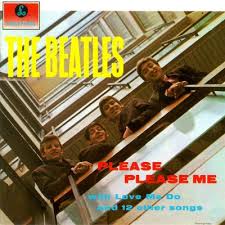 Album: Please Please Me
Release Date: March 22 1963
I often disagree with reviews from Pitchfork Media, but their critiques of the Beatles remasters offer some nice insights, or at the very least a valuable framework for viewing each album.
For Please Please Me, Pitchfork's Tom Ewing describes it as a way to deliver the titular hit single while also teasing the buying public with a large sample of what the band played through in their live shows. Based on what I know of their history, this makes sense. It fits in nicely with the story of how the album was recorded in one long session, using very few takes. Please Please Me was largely a promotional vehicle, a quick and cheap way to get the band out there to see what, if anything, would stick with listeners. It is perhaps only due to the band's talent that such a release is as good as it is.
I agree with Ewing's comment that the entire album can be danced to, which makes perfect sense if the album consists of live show staples. I also agree that the album feels cohesive despite being a mix of originals and covers. There's an overall sound of twangy guitars and sweet, syrupy harmonies which is only occasionally interrupted. But despite these positive qualities, the album doesn't always click with me. There are fourteen songs, which is right in line with the majority of Beatles albums, yet it's the only one where I end up wondering when it will end. I look at the track list, and think to myself, "These are all great songs. Why am I so impatient to get through them?" That's when I have to admit to myself that I don't like "Misery" or "Ask Me Why", or even "Please Please Me" itself nearly as much as I think I do. And the tracks that I don't like are scattered in such a way that they kill any momentum the album manages to work up.
But what's most striking to me about Please Please Me is that no song goes over three minutes in length, yet each feels longer than they actually are. My guess, as a budding writer, is that the dance hall nature of this early material leads to a heavier emphasis on vocal harmony over strong instrumentation. To my ear, all the long phrases and "woohs" and "ahhs" make even the songs with a brisk tempo feel slower than they are. There are no hooks, no wild shifts in tone, because these qualities aren't apt to dance.
Thankfully, when Please Please me does work, it clearly demonstrates that the Beatles were playing with genius. "I Saw her Standing There" may be the greatest first track in the history of rock. The beat is fast, every instrument is clear and perfectly used, and the harmonies are golden. On the other end of the record, their cover of "Twist and Shout" is so raw, at once both surprising yet seemingly appropriate. Even when dealing with covers, the Beatles knew how to combine the intent of the original with their own personal spin, in this case creating a definitive version of the classic tune. The same can be said for their cover of "Boys" by The Shirelles, which somehow comes to life on the Rock Band game tie-in. As for other originals, "Do you Want to Know a Secret?" always wins me with its charm, and I'd easily take "Love Me Do" over "Please Please Me" as the best song to identify the record with.
There's a lot of fun in Please Please Me, but don't be afraid to pick and choose on this one. There are better whole album experiences to be had.
A note on reviews
I figured out why I keep promising, but then failing, to write album reviews. As much as I have learned over the years in regards to popular music, I haven't learned quite enough to be able to express myself properly. I don't know quite enough history, nor can I identify influences or styles with enough precision. I fear that I will write something that sounds definitive but incorrect, excited but unorganized. But if I let that fear take control, I'll never get better. So I decided that if I have to read other reviews to get an idea of what it is I'm feeling but can't express, so be it. I'll still try and agree/disagree when I feel it is needed.
Tuesday, March 16, 2010
One Week
One week with the Droid. How has it been faring?
- The learning curve is pretty much gone. I haven't used every little feature (like keyboard shortcuts), but I don't think there are many that I don't at least know about. Having to use the Menu button to access app settings and features isn't as bad as I thought it would be. The most important ones are easy to get to, and a lot of the ones I thought can be mostly ignored once you get things configured the way you want.
- I'm liking the touch keyboard more and more.
- I like the ability to add widgets. It forces me to do things like actually check my calendar in detail.
- The accelerometer is a bit wonky.
- While the built in apps are very well made, for some reason I assumed that Android Marketplace would be filled with all sorts of optional, fun apps from Google themselves. That isn't really the case; they've got some stuff on there, but in far less quantity. Maybe they're too busy updating the OS itself.
- Too many "bastard stepchild" apps. The best ones integrate seamlessly with Android, but others are quick and dirty ports from the iPhone. You can tell which is which based on whether the MEnu button does anything. On the iPhone ports, it won't, and instead all of your options will be on the bottom of the screen. Not the end of the world really, but without proper optimizations for the Droid's screen/touch capability, these apps can be more troublesome to use than they should be.
- Google Listen is a great program, but not a perfect one. You can add podcast subscriptions in Google Reader, and Listen will sync up with them, allowing you to tune in to your favorite podcasts wherever you are. At first I thought this was one of those programs that enables lazy people, and I guess it still is, but it is the kind of convenience I can get behind. Before, I would have to download podcasts to my PC (often rebooting from Ubuntu to Windows solely to do this), load them onto the Zune, and delete them afterwards. I would also have to make sure I had enough space on the player. It wasn't terribly time consuming, but it required a lot of effort and upkeep just to listen to some hour long shows. Google Listen allows me to fire up a show, then ditch it as soon as I'm done. And since it downloads the sound files, I can start a 'cast when I get on the subway, and continue listening when I go underground and lose phone signal.
So what's the problem? While the interface is simple and crisp, the updating mechanism is confusing when set to manual. It never really tells you whether a refresh is successful, so you have go to your show list and see if there are any changes. Furthermore, the playback mechanism is not explained in detail. I guess the best way to describe it is that Listen downloads any show you start to play, but begins playback immediately. So it looks as if it is streaming, but it saves the buffer for later use. This is nice, but I'm not sure if there is a way to force it to just stream or just download. I don't mind having to delete old shows, but I would like to know exactly what is going on (and why).
- The learning curve is pretty much gone. I haven't used every little feature (like keyboard shortcuts), but I don't think there are many that I don't at least know about. Having to use the Menu button to access app settings and features isn't as bad as I thought it would be. The most important ones are easy to get to, and a lot of the ones I thought can be mostly ignored once you get things configured the way you want.
- I'm liking the touch keyboard more and more.
- I like the ability to add widgets. It forces me to do things like actually check my calendar in detail.
- The accelerometer is a bit wonky.
- While the built in apps are very well made, for some reason I assumed that Android Marketplace would be filled with all sorts of optional, fun apps from Google themselves. That isn't really the case; they've got some stuff on there, but in far less quantity. Maybe they're too busy updating the OS itself.
- Too many "bastard stepchild" apps. The best ones integrate seamlessly with Android, but others are quick and dirty ports from the iPhone. You can tell which is which based on whether the MEnu button does anything. On the iPhone ports, it won't, and instead all of your options will be on the bottom of the screen. Not the end of the world really, but without proper optimizations for the Droid's screen/touch capability, these apps can be more troublesome to use than they should be.
- Google Listen is a great program, but not a perfect one. You can add podcast subscriptions in Google Reader, and Listen will sync up with them, allowing you to tune in to your favorite podcasts wherever you are. At first I thought this was one of those programs that enables lazy people, and I guess it still is, but it is the kind of convenience I can get behind. Before, I would have to download podcasts to my PC (often rebooting from Ubuntu to Windows solely to do this), load them onto the Zune, and delete them afterwards. I would also have to make sure I had enough space on the player. It wasn't terribly time consuming, but it required a lot of effort and upkeep just to listen to some hour long shows. Google Listen allows me to fire up a show, then ditch it as soon as I'm done. And since it downloads the sound files, I can start a 'cast when I get on the subway, and continue listening when I go underground and lose phone signal.
So what's the problem? While the interface is simple and crisp, the updating mechanism is confusing when set to manual. It never really tells you whether a refresh is successful, so you have go to your show list and see if there are any changes. Furthermore, the playback mechanism is not explained in detail. I guess the best way to describe it is that Listen downloads any show you start to play, but begins playback immediately. So it looks as if it is streaming, but it saves the buffer for later use. This is nice, but I'm not sure if there is a way to force it to just stream or just download. I don't mind having to delete old shows, but I would like to know exactly what is going on (and why).
Wednesday, March 10, 2010
More thoughts
I made errors in judgment in my last few posts. Next time I'll do better research. In our last episode, I chided LG for making what I thought was a silly iPhone ripoff with the Venus. What I forgot is that it is only one of many phones that they make. I was recently informed of the LG Prada, which launched close the iPhone, has many similar features, and looks rather slick.
So I need to revise my thought about Apple's success. I still believe that they know how to make basic computing concepts simple and user friendly, as well make hardware that looks nice and packs power. But the problem with the competition is not that they can't do the same things. Rather, they get into trouble because Apple puts their balls in a vicegrip. They can make something that's slim, fast and gorgeous, but if it isn't the same as the look and feel of Apple's products, people won't be nearly as excited. They end up being forced to abandon their own concepts and mimmick Apple, because everything else gets crushed.
Of course, doing this makes their products look like second rate knockoffs, so they still wind up losing.
I guess the best approach would be to stake out one's own path, carve out a niche, and try to expand it. Still, this has to be frustrating when you realize that the only reason you have to work that much harder (and longer) is because you can't generate a Reality Distortion Field.
This makes me think some more about Apple's recent lawsuit against HTC for patent violations. As always, these software patents are used irresponsibly, and the nature of the descriptions create enough wiggle room for people to create poor but convincing defenses, either because the text is too vague, or the concept is.
There's a whole lot of bickering going on about this over at slate.com, and the thing that gets me is that Apple apologists mount their defense based on very specific, strict facts. We all love facts, because compared to opinions, they're a hell of a lot better at proving things. But facts work come in different flavors. If you have a scientific fact, there's nothing you can do to rationally wave it away. It isn't going to change, unless you can use more science. But if state the fact that some terrible thing a corporation does is entirely legal, does that end the discussion just as quickly? Yes, it is a fact, but unlike the laws of physics, the laws of government can change. And the fact that something was allowed doesn't make it right. Humans make mistakes, after all. I'm sure someone out there would grill me for this, but in my mind, a person who argues the gravitational constant has no leg to stand on, but the person who is upset that a corporation screwed someone over by using loopholes shouldn't be immediately dismissed.
This is why the pro Apple arguments bug me so much. Yes, patent law as we know it today allows them to file a suit, but that doesn't mean that patent law is working properly. And yes, there are certain aspects of the iPhone that are original in a very specific sense, but that doesn't mean it was fit to patent. The argument that we should "hate the player, not the game" doesn't always work. If we don't hate the players, then the game will never change. You can try, but if we don't see anything wrong with the someone's actions, then there doesn't appear to be any reason to change.
One of the worst arguments I saw on slate boiled down to claiming that Apple is in the right place at the right time. He claimed that their use of a entirely multi touch based device was unheard of before, and is original enough to patent. Everyone else has to build touch features onto pre-existing interfaces, such as a key or mouse based device. (PS - can the iPhone work without ever using it's single button? If not, it ain't a multi touch only device).
But on a gut level, I see no difference between "multi touch based device" and "mouse driven device". The argument can be interpreted as saying that if the mouse or the GUI was invented in the 2000's, then the inventors would be right in patenting them, and forcing other device makers into building it on top of other interfaces. Imagine if we actually had to do that. It sounds absurd, because it is. Keyboards and touch screens have been around for a long time. Using them in different ways is only so original. And in my mind, they are not original enough to patent. There's also the problem that hardware like a keyboard and mouse is such that their functionality is largely determined by the actual configuration of the hardware. Touch screen interfaces are governed far more by their software than a Logitech mouse. Hardware is a lot more concrete than software, which is why software patents are almost universally despised. We can use this example in my previous argument - there were some legal issues surrounding GUI's, which are interfaces based mostly on software, during their creation. These were resolved, and these days no one can really stop you from making a GUI based OS. But imagine if instead we had a legal showdown like this one Apple is brewing up? That would be rather dangerous. Not to mention that the actual issues that came up were resolved by Apple working with Xerox. In this current battle, Apple has put competitors in the situation they were once in, without the chance to wheel and deal. This is a fact too, but it won't be used by apologists to negate the necessity of the lawsuit.
Lastly, there's the really finicky, not-so-fact based dilemma of Apple being in a position of power. One commenter argued that if they didn't file these patents, someone like HTC would. It was a first strike scenario. When the law works as intended, size won't matter, and indeed, we have seen large corporations lose out to smaller patent holders, and vice versa. But if HTC had these patents, and filed suit against Apple, you wouldn't see Mac fans defending the little guy. They'd laugh at the fact that the underdog dared to try and get in the behemoth's way. But in the world of Internet debate, such touchy feely ideas are stomped upon, no matter how accurate they may be.
I should have just made this argument with a bit of common sense. If Apple is going to purposefully ignore features and software that they don't like, then screw them for trying to stop people from building upon their ideas.
So I need to revise my thought about Apple's success. I still believe that they know how to make basic computing concepts simple and user friendly, as well make hardware that looks nice and packs power. But the problem with the competition is not that they can't do the same things. Rather, they get into trouble because Apple puts their balls in a vicegrip. They can make something that's slim, fast and gorgeous, but if it isn't the same as the look and feel of Apple's products, people won't be nearly as excited. They end up being forced to abandon their own concepts and mimmick Apple, because everything else gets crushed.
Of course, doing this makes their products look like second rate knockoffs, so they still wind up losing.
I guess the best approach would be to stake out one's own path, carve out a niche, and try to expand it. Still, this has to be frustrating when you realize that the only reason you have to work that much harder (and longer) is because you can't generate a Reality Distortion Field.
This makes me think some more about Apple's recent lawsuit against HTC for patent violations. As always, these software patents are used irresponsibly, and the nature of the descriptions create enough wiggle room for people to create poor but convincing defenses, either because the text is too vague, or the concept is.
There's a whole lot of bickering going on about this over at slate.com, and the thing that gets me is that Apple apologists mount their defense based on very specific, strict facts. We all love facts, because compared to opinions, they're a hell of a lot better at proving things. But facts work come in different flavors. If you have a scientific fact, there's nothing you can do to rationally wave it away. It isn't going to change, unless you can use more science. But if state the fact that some terrible thing a corporation does is entirely legal, does that end the discussion just as quickly? Yes, it is a fact, but unlike the laws of physics, the laws of government can change. And the fact that something was allowed doesn't make it right. Humans make mistakes, after all. I'm sure someone out there would grill me for this, but in my mind, a person who argues the gravitational constant has no leg to stand on, but the person who is upset that a corporation screwed someone over by using loopholes shouldn't be immediately dismissed.
This is why the pro Apple arguments bug me so much. Yes, patent law as we know it today allows them to file a suit, but that doesn't mean that patent law is working properly. And yes, there are certain aspects of the iPhone that are original in a very specific sense, but that doesn't mean it was fit to patent. The argument that we should "hate the player, not the game" doesn't always work. If we don't hate the players, then the game will never change. You can try, but if we don't see anything wrong with the someone's actions, then there doesn't appear to be any reason to change.
One of the worst arguments I saw on slate boiled down to claiming that Apple is in the right place at the right time. He claimed that their use of a entirely multi touch based device was unheard of before, and is original enough to patent. Everyone else has to build touch features onto pre-existing interfaces, such as a key or mouse based device. (PS - can the iPhone work without ever using it's single button? If not, it ain't a multi touch only device).
But on a gut level, I see no difference between "multi touch based device" and "mouse driven device". The argument can be interpreted as saying that if the mouse or the GUI was invented in the 2000's, then the inventors would be right in patenting them, and forcing other device makers into building it on top of other interfaces. Imagine if we actually had to do that. It sounds absurd, because it is. Keyboards and touch screens have been around for a long time. Using them in different ways is only so original. And in my mind, they are not original enough to patent. There's also the problem that hardware like a keyboard and mouse is such that their functionality is largely determined by the actual configuration of the hardware. Touch screen interfaces are governed far more by their software than a Logitech mouse. Hardware is a lot more concrete than software, which is why software patents are almost universally despised. We can use this example in my previous argument - there were some legal issues surrounding GUI's, which are interfaces based mostly on software, during their creation. These were resolved, and these days no one can really stop you from making a GUI based OS. But imagine if instead we had a legal showdown like this one Apple is brewing up? That would be rather dangerous. Not to mention that the actual issues that came up were resolved by Apple working with Xerox. In this current battle, Apple has put competitors in the situation they were once in, without the chance to wheel and deal. This is a fact too, but it won't be used by apologists to negate the necessity of the lawsuit.
Lastly, there's the really finicky, not-so-fact based dilemma of Apple being in a position of power. One commenter argued that if they didn't file these patents, someone like HTC would. It was a first strike scenario. When the law works as intended, size won't matter, and indeed, we have seen large corporations lose out to smaller patent holders, and vice versa. But if HTC had these patents, and filed suit against Apple, you wouldn't see Mac fans defending the little guy. They'd laugh at the fact that the underdog dared to try and get in the behemoth's way. But in the world of Internet debate, such touchy feely ideas are stomped upon, no matter how accurate they may be.
I should have just made this argument with a bit of common sense. If Apple is going to purposefully ignore features and software that they don't like, then screw them for trying to stop people from building upon their ideas.
Subscribe to:
Posts (Atom)